Essential Oils for Candles making industry has exploded over the past decade, with consumers spending over $2.4 billion annually on scented candles in the United States alone. If you’re launching a candle business or want to improve your existing product line, understanding essential oils is non-negotiable. These concentrated plant extracts transform plain wax into aromatic experiences that command premium prices and build customer loyalty. But not all essential oils work equally well in candles, and choosing the wrong ones can result in weak scent throw, poor blending, or even candles that fail to cure properly. Here you go through everything you need to know about selecting, blending, and using essential oils in candle making.
Key Takeaways
- Essential oils provide superior aromatic quality compared to fragrance oils, though they typically cost more and have lower scent throw in candles.
- Top-performing essential oils for candles include lavender, lemongrass, eucalyptus, peppermint, and cedarwood, each offering distinct market appeal.
- Blending ratios, curing time, and wick selection dramatically affect how well your candles perform, so testing is essential before scaling production.
- Compliance with FDA regulations and proper labeling builds trust with customers and protects your business from liability issues.
- Sourcing high-quality oils from reputable suppliers ensures consistency, purity, and the scent longevity that keeps customers returning.
Why Essential Oils Matter in Candle Making
Essential oils are the aromatic backbone of premium candles. Unlike synthetic fragrance oils, they’re derived from actual plant materials through distillation or cold-pressing methods. This distinction matters because consumers increasingly seek natural products, and essential oil candles command higher price points on retail shelves. A soy candle infused with pure lavender essential oil can retail for $30-50, while a paraffin candle with synthetic fragrance might sell for $8-12. The difference isn’t just perception; it’s real. Essential oils deliver complex, nuanced scents that synthetic alternatives struggle to replicate authentically.
That said, essential oils present challenges that fragrance oils don’t. Many essential oils are volatile, meaning they evaporate quickly, especially in the high heat of a burning candle. This volatility can reduce scent throw—the distance the aroma travels when the candle burns. Some makers address this by blending essential oils with a small percentage of fragrance oils to improve performance. Others focus on niche markets where subtle, authentic scents trump maximum scent projection. Your choice depends entirely on your target customer and price positioning.
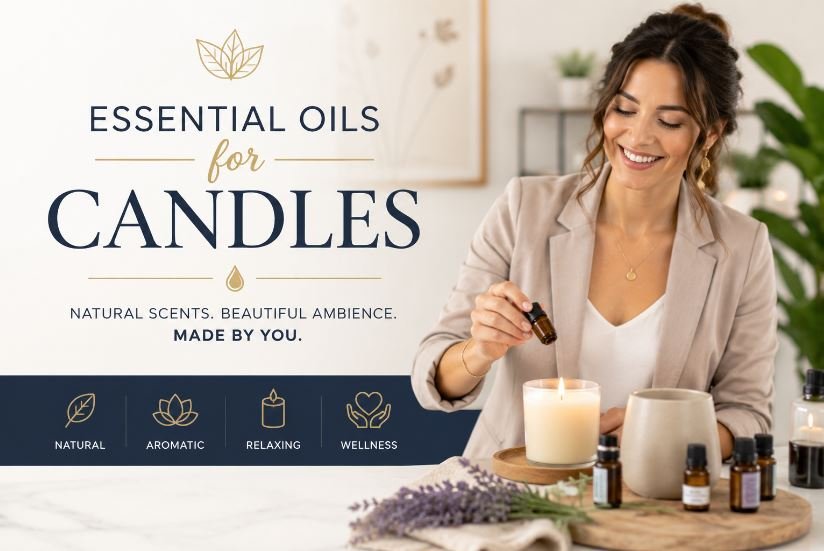
Best Essential Oils for Candle Making
Not every essential oil works well in candles. Some break down under heat, others don’t blend smoothly with wax, and some carry licensing restrictions if you’re selling commercially. Here are the essential oils that consistently perform well in the candle-making industry:
Lavender Essential Oil
Lavender remains the best-selling scent category in the candle market. Its calming properties appeal to wellness-conscious consumers, and the aroma is universally recognized. French Provence lavender and Bulgarian varieties command premium prices because of their superior scent profiles. A 30-gram batch of soy candle typically uses 2-3% lavender by weight, which translates to roughly 0.6-0.9 grams per 100-gram candle. Lavender works exceptionally well in blends with chamomile, eucalyptus, or geranium oils.
Lemongrass Essential Oil
Lemongrass delivers a fresh, energizing scent that performs well in summer candles and home office products. It has better scent throw than most citrus oils and doesn’t fade as quickly during the burn. This makes it popular with candle makers targeting the wellness and productivity markets. Lemongrass blends beautifully with ginger, peppermint, and cedarwood, creating sophisticated multi-note candles that appeal to discerning customers. Cost-wise, lemongrass sits at the mid-range, making it accessible for producers of various scales.
Eucalyptus Essential Oil
Eucalyptus is a powerhouse for respiratory and wellness-themed candles. Consumers seeking stress relief or sinus support gravitate toward eucalyptus products, creating a dedicated customer segment. The oil has good scent throw and doesn’t degrade significantly at typical candle-burning temperatures. Australian eucalyptus varieties tend to be slightly cheaper than other premium sources, improving your profit margins. As with lavender, eucalyptus performs best at 2-3% concentration and pairs well with peppermint, lemon, and rosemary.
Peppermint Essential Oil
Peppermint adds energy to any candle blend. It’s particularly valuable during winter months and around the holidays when consumers seek invigorating scents. The oil is potent, so you need only 1-2% concentration to achieve noticeable aroma. Use more than 3%, and the scent becomes overwhelming and can irritate sensitive noses. Peppermint blends work exceptionally well with eucalyptus, lavender, and chocolate-inspired fragrance notes that round out the menthol’s intensity.
Cedarwood Essential Oil
Cedarwood appeals to the masculine and luxury candle segments. It’s warm, woody, and slightly spicy, making it ideal for sophisticated blends. Virginian and Atlas cedarwood varieties each bring slightly different notes, so experimenting with sources can help you develop signature scents. Cedarwood ages beautifully in soy wax and doesn’t lose potency during storage, making it perfect for inventory management. The oil pairs exceptionally well with frankincense, bergamot, and juniper berry.
Blending Techniques That Work
Creating signature candle scents requires understanding fragrance composition. Professional perfumers work with three tiers: top notes (the first impression), heart notes (the middle, lasting scent), and base notes (the foundation that lingers). Essential oils typically fall into these categories, and successful blending respects this hierarchy.
A balanced blend might allocate 20-30% to top notes (citrus oils like lemon or bergamot), 50-60% to heart notes (lavender, geranium, rose), and 10-20% to base notes (cedarwood, sandalwood, vetiver). For example, a popular spa blend combines 10% lemon oil, 60% lavender, and 30% cedarwood. Always start with small test batches—a 30-gram candle test—before scaling to larger volumes. Track every drop in a spreadsheet because consistency matters tremendously for customer satisfaction and repeat purchases.
Temperature control during blending is critical. Never heat essential oils directly; instead, add them to pre-melted wax that’s cooling to around 160-170°F. Pouring essential oils into extremely hot wax can cause them to evaporate before integrating properly. Stir slowly for 2-3 minutes to ensure even distribution, then let the blend cool before pouring into containers. This patience pays dividends in scent consistency.
Sourcing Quality Essential Oils
Your candle quality depends entirely on your raw materials. Buying from reputable suppliers—not just the cheapest options on marketplace platforms—protects your business. Look for suppliers offering GC-MS testing certificates (gas chromatography-mass spectrometry), which verify purity and composition. This certification matters legally if you’re making health claims about your candles.
Organic certification adds value for marketing purposes, though it comes at a premium cost. If pursuing organic claims, verify that your supplier holds legitimate USDA or equivalent certification. Some reputable sources include plant distilleries in origin countries rather than middlemen, ensuring fresher oils and better traceability. Expect to pay 15-40% more for genuine certified oils, but the difference in scent quality and customer retention justifies the investment.
Storage matters too. Essential oils degrade when exposed to light and heat. Store bottles in dark glass, away from direct sunlight, and ideally in a cool space. Properly stored oils last 2-3 years; improperly stored oils lose potency within months. This affects both your costs and your ability to maintain consistent blends over time.
Compliance and Labeling Considerations
The FDA doesn’t regulate cosmetic candles as heavily as skincare products, but regulations do exist. If you’re making therapeutic claims—saying your candle relieves anxiety, clears sinuses, or treats any health condition—you’re effectively making drug claims, which require different labeling and documentation. To stay safe, focus on descriptive language: instead of “this candle relieves stress,” you might say “created with essential oils traditionally associated with relaxation.”
Your product label must include the candle weight, net weight of wax, burning time estimates, wick care instructions, and safety warnings. List ingredients, including your specific essential oils. If you’re blending with fragrance oils, disclose that too. Transparency builds customer trust and protects you legally if someone has an allergic reaction or burns their candle improperly. Include guidance like “trim wick to 1/4 inch to prevent smoking” and “never leave a burning candle unattended.”
Check your local regulations too. Some states require specific burn time testing before making claims, and some craft markets require proof of compliance. A small investment in legal documentation now prevents costly issues later.
Testing and Curing for Optimal Results
Many candle makers rush to sell new creations without proper testing. This is a mistake. Every essential oil blend, every wick size, and every container requires testing to ensure the candle burns evenly, holds scent well, and looks appealing. Cure time—the period a candle must sit before burning—typically ranges from 24 hours to two weeks depending on your wax type. Soy candles, popular with eco-conscious consumers, benefit from longer curing periods of 1-2 weeks, which allows the wax and oils to fully integrate.
Test multiple wick sizes with your blend. A wick too small won’t produce enough heat for proper melting, while one too large creates excess soot. Burn test candles for the full duration they’re marketed to burn, observing how the scent performs over time. Does it stay strong, or does it fade after 30 minutes? Document everything. These notes become invaluable as you scale production and troubleshoot customer complaints.
Making Essential Oil Candles Profitable
Profitability in candle making depends on balancing material costs against market pricing. A 100-gram soy candle might cost $3-5 in materials (wax, wick, container, essential oils) and sell for $25-35 retail. That’s a solid margin jobs, but only if you’re efficient with production. Batch small quantities first to minimize waste from failed experiments. As you grow, larger oil purchases and bulk wax orders improve per-unit costs significantly.
Market your candles strategically. Essential oil candles appeal to wellness enthusiasts, eco-conscious consumers, and gift-givers seeking premium products. Direct-to-consumer sales through your website or Etsy typically yield higher margins than wholesale arrangements with retailers. Social media, particularly Instagram and TikTok, works exceptionally well for candle marketing; showcase your blending process, before-and-after container designs, and customer testimonials. Pricing psychology matters too—emphasize that essential oils cost significantly more than fragrance oils, justifying your premium pricing.
Conclusion
Creating luxurious, profitable candles with essential oils requires knowledge, patience, and attention to detail. You’ve now learned which oils perform best, how to blend them properly, where to source quality materials, and how to ensure compliance with regulations. The candle market continues growing because consumers crave authentic, natural products that enhance their homes and wellbeing. By mastering essential oil candle making, you’re positioning yourself in a lucrative segment of this expanding industry. Start small, test thoroughly, and let customer feedback guide your next creations.
FAQs
What percentage of essential oils should I use in my candles?
Most candle makers use 2-3% essential oil by weight of the total batch. So for a 300-gram batch of wax, you’d add 6-9 grams of essential oils. Some highly fragrant oils like peppermint work well at just 1-2%, while less potent oils might go up to 4%. The key is testing. Start at 2% with your chosen blend, burn test the candle, and adjust based on scent strength. Remember that blending with other oils affects overall concentration—if you’re mixing five different oils, each might be 0.4-0.6% individually, totaling 2-3% combined.
Can I use fragrance oils instead of essential oils?
Yes, fragrance oils are easier to work with, have better scent throw, and cost less. However, they’re synthetic and lack the natural appeal that commands premium pricing. Many successful candle businesses use a hybrid approach: blending high-quality essential oils with a small percentage of complementary fragrance oils to improve performance while maintaining the “natural” positioning. If you go this route, be transparent in your labeling. Consumers increasingly research ingredients, and honesty builds long-term loyalty.
How long should I cure candles before selling?
For soy candles, the standard is 2 weeks minimum, though 3-4 weeks is ideal. This gives the wax time to fully set and allows the essential oils to integrate thoroughly, resulting in better scent performance and a more professional burn. Paraffin wax candles typically need only 24-48 hours. The extra curing time isn’t wasted; it’s when chemistry happens. Candles sold too early burn unevenly, tunnel (where only the center burns), and produce disappointing scent throw. Your reputation depends on letting candles cure properly.
Which essential oils are safe if my candles are used in homes with pets?
This is a critical marketing consideration. Cats and dogs are sensitive to certain essential oils; tea tree, eucalyptus, and citrus oils can be problematic in concentrated forms. That said, essential oils diluted in candles pose minimal risk compared to concentrated oils applied directly to skin or ingested. Still, market responsibly. If targeting pet owners, stick with lighter blends and avoid heavily concentrated single-oil formulas. Many candle makers create specific “pet-safe” product lines using oils like lavender and chamomile at very conservative percentages (1% or less). Include a note suggesting proper ventilation and never using candles in sealed rooms with pets.
How do I know if my essential oils are pure and not adulterated?
Request GC-MS test results from your supplier. This lab analysis shows the exact chemical composition of the oil and confirms purity. Reputable suppliers provide these certificates freely. Red flags include oils priced significantly lower than industry standards (likely diluted or adulterated), suppliers unwilling to provide documentation, or oils claiming multiple properties that seem too good to be true. Buy from established distilleries or verified wholesalers rather than marketplace sellers with minimal reviews. Your investment in quality oils directly translates to better candles and happier customers who return for repeat purchases.